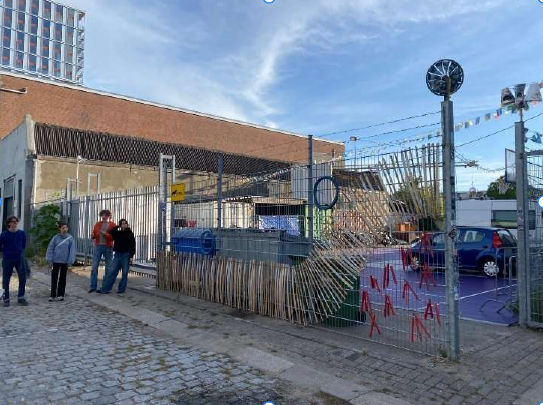
“In a city comprised of instability and change, the underlying uncertainty manifested a bond between all of us students. Encouraged to work together as a unit, or in fragmented groups, we exceeded each other expectations and comfortably worked together intuitively. The daily soups nourished us to the best of its ability. Effectively we were “glamping” at Skateland.”
“Plainly, this workshop enforced us to navigate uncertainty. And while in the moment we were embraced by certain misfortunes and less ideal circumstances such as stolen bike keys, bed bugs, typical dutch weather, and a slow burning cooktop, my reflection today remains thankful and joyous because of communal effort to make the most of the experience. While I wish I had brought my own bike, I nonetheless loved the regularly scheduled bike tours guided by Hans. I loved getting to see the city from all perspectives, catching countless glimpses of its serious complexity. And even though we certainly made some locals mad with our long line of students, it was easy to laugh it off with my forward or backward neighbor.”
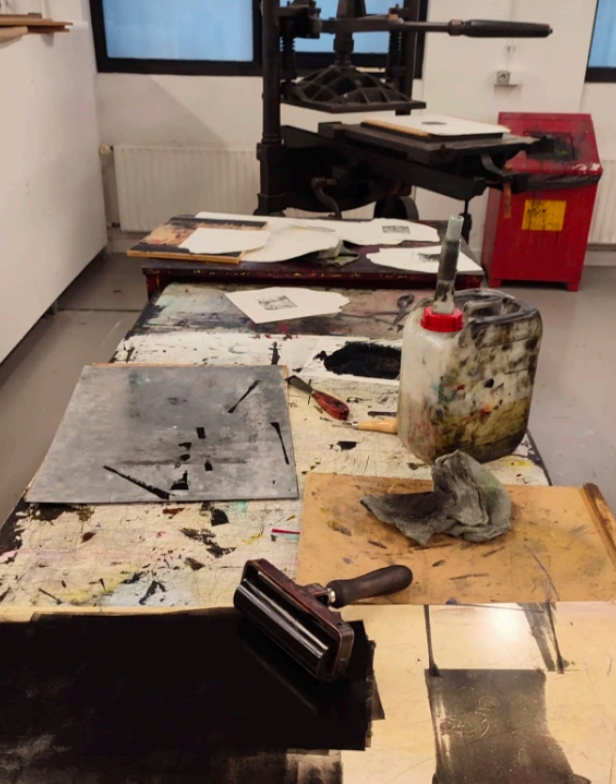
“A very nice and informative workshop introduction with the end result of a self-bound notebook. Very useful and directly applicable.”
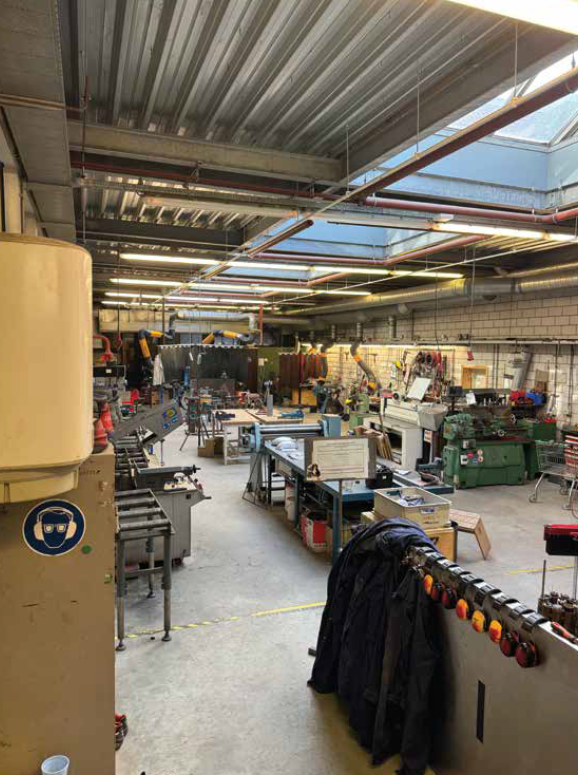
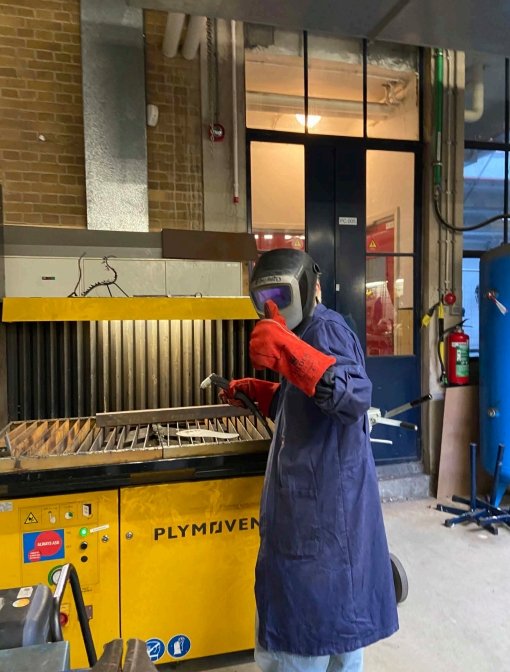
“A nice introduction to the workshop with a good overview and hands-on practice for most of the machines. I felt well prepared to work there after the instruction.”
“Seemed a bit chaotic but informative. It prepared me well for working there.”
“A nice introduction to the workshop with a good overview and hands-on practice for most of the machines. I felt well prepared to work there after the instruction.”
“General overview without specific introductions to machines. I didn’t feel well prepared afterwards to work in that department.”
“Nice workshop introduction with self-made earrings as a result. It prepared me well to work there independently afterwards.”
“A short but hands on Workshop that clarified the basic of 3D printing. The people working there seemd very nice and open for helping with further more detailed projects.”
“A sort of derivation of a Derive, experiencing a city through the means of constant noise was incredibly grounding. Since this workshop I find myself listening to music less and less on my commutes to school, the store, or other events. Becoming conscious of the variety of sounds and the way they replace each other as you move or stay still, reminds you of the city’s density. To put it in terms of a bodily relationship, the city acts as a whole human, fit with character and identity, yet you are one cell, maneuvering a predetermined path through a vessel. This workshop also influenced the notions of communication. Unable to speak for its entirety, we all relied on facial expressions and body language to get an idea across. I never felt so alone, yet so connected to others.”
“I appreciate the diversity of the walk as well. Listening to the different micro-sites of The Hague gave each space an actual voice, and in that respect defined its identity beyond appearance. I tried to listen to what they were trying to tell me, but translating noises into comprehensible words is about as straightforward as it sounds.”
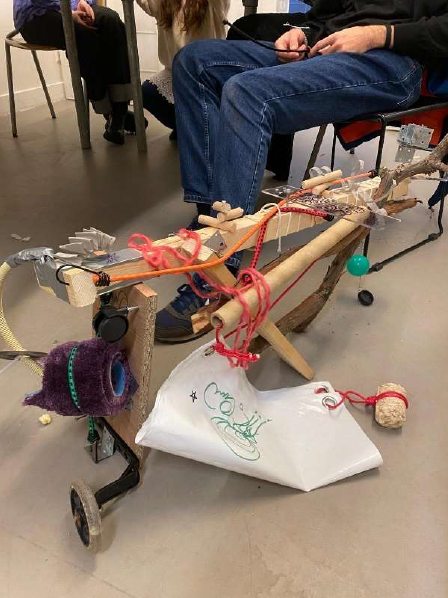
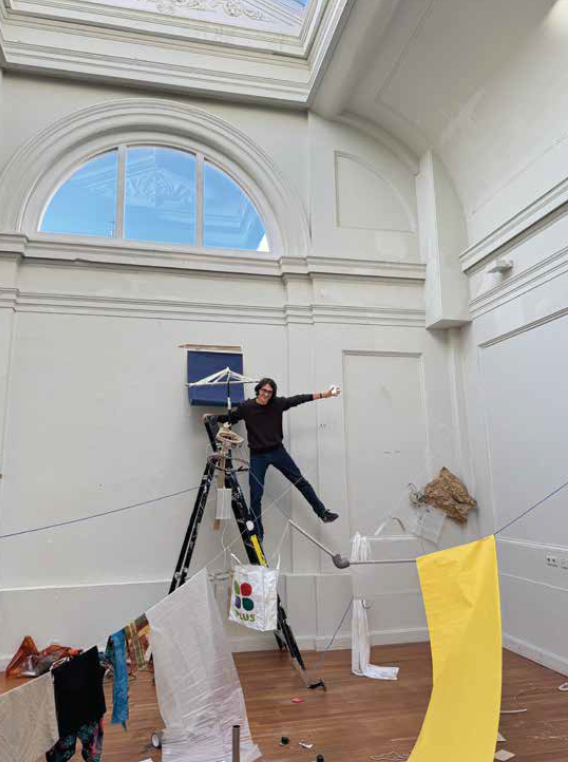
“We did a music & sound workshop with Guy Livingston, which involved a lecture and listening session, and a building exercise in the latter part of the workshop. We used foundmaterials to build our own ‘musical instrument’. As someone with perfectionist tendencies, this workshop was a little challenging for me, as I like things I make to look a certain way. Working with materials found on the street and relinquishing control over the final form pushed me to focus less on visual outcome and more on process, sound, and experimentation. The exercise encouraged play, improvisation, and responsiveness, shifting my attention from aesthetics to sensory experience and performance. Ultimately, the workshop helped me embrace imperfection as a productive condition and expanded my understanding of sound as a spatial and material practice.”
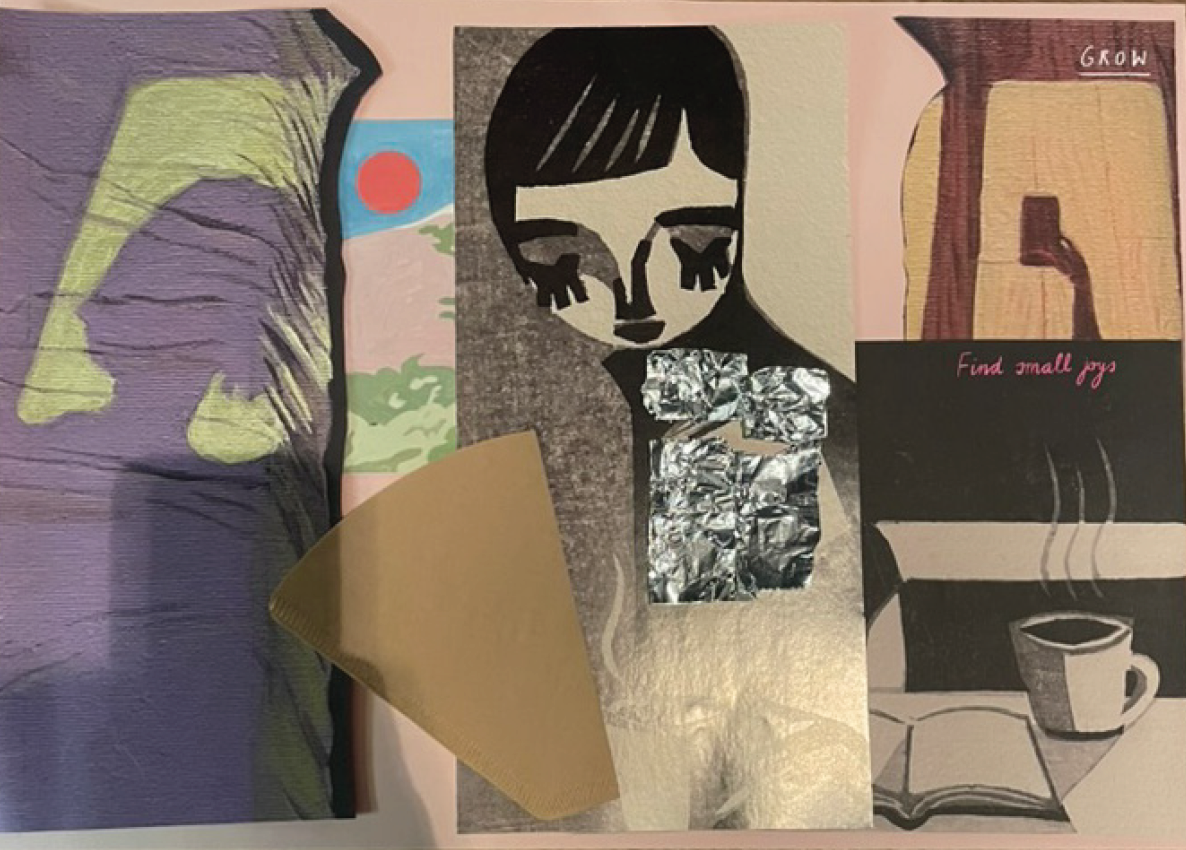
“In this workshop organized by second year students, we explored the idea of rituals and how everyday actions are connected to space, memory, and emotion. We reflected on personal rituals from places where we have lived before and to express these experiences through the body and visual collage. The workshop took place in the auditorium in the morning, with soft lighting and a calm atmosphere. We sat on the floor in a circle and started the day by sharing coffee, tea, and small snacks while listening to music. This created a relaxed and friendly environment, which made it easier to open up and share personal experiences.”
“We first talked together about personal rituals and how simple daily actions, such as making coffee or sitting in a certain place, can carry certain spatial memories and emotional meaning. It was interesting to hear how different people connect routines with specific spaces and feelings. And we worked in small groups and were asked to remember a house where we had lived before and think about the rituals or repeated actions we used to do there. Without speaking, we had to use only our bodies and movements to express these memories and spatial behaviors. Later, we shared and explained what our movements represented. Then we created collages on paper based on our rituals and memories. We used images and shapes to represent spaces, actions, and emotions connected to those experiences.”
“From this workshop, I learned that rituals are not only habits, but also strong carriers of emotional and spatial memories. Small actions can be deeply connected to specific rooms, objects, and moments in our lives.”
“This workshop was divided in two parts. I really enjoyed the first one, it consisted into watching outside of the window with music and it made the visual experience of a street feel really special and like a movie. The second part where we were making an object trusting our instantaneous instincts felt really relaxing but didn't make me feel really proud of what I made afterwards. I struggled to connect with the artefact that was created in the end.”
“A narrative and a story communicated ideas, ideals, and fantasies. After establishing groups and contexts at random, a collective effort constructed a convergence of characters, seasons, and motivations. The general sense of urgency ensured that the story was as momentary as possible, relying on intuition and mainly impulse to grasp the thin air.”
“At the moment of the convergence, the freedom of every group’s choices allowed for a each story to blend smoothly given enough post-rationalization. Ultimately it was a very relaxed resolution, even though my perfectionist attitudes wanted to make last minute changes.”
“A combination of automatic making and language. I will always take any excuse to lean into my childish instincts and use the objects in my immediate vicinity to create. However, the start of the workshop allowed us to understand our various perceptions of our natural environment through language. Tasked with a timed brainstorm to come up with as many words for natural things like plants, trees, and grass in our native language, and then again in our second language was a fun experiment to be a part of. Seeing as most of us had more words to write in our native language, the differences between words of different languages proved to show the change of perception of space. The range of specific focal points of each language and the potential assortment of words for one generalized term in a different language was fascinating. Language seemed to camouflage perception. This was then translated into an unconscious making activity where our collectively found materials were used to make a pattern, translating something urban into something natural.”
“In the photography workshop with Riccardo, I learned how to work collaboratively with a photographer to communicate my ideas. The experience highlighted photography as a collaborative practice, where the quality of the final images is shaped as much by dialogue and trust as by technical execution.”
“In our presentation workshop with Tjy, we focused on how to create a strong prescence; through projection, clarity, and physical prescence. We did many exercises, like reading a poem outloud in different tones and imaginary situations, which was helpful to get out of our heads and be in the moment.”
“Tjy asked resonant questions that helped Frieda and I compartmentalize the extensive research we had conducted. His ability to absorb the information we presented and simplify it into a few sentences gave us a strong backbone to formulate our collective presentation.”
“If at any point I said something that “clicked” (or not) with Tjy, he would interrupt and immediately let me know. This act helped me immediately realize what could be sustained or released. From that moment I would begin presenting again from the start until the concept and my message was flushed out.”
“I really admired this process and it reminded me of when I was studying classical guitar. During lessons my teacher would do the same. The act of repetition conditions the muscle memory with an immediate feedback. As I went through my talking points I had a voice in my head subconsciously reconfiguring their order and delivery that aligned with Tjy’s feedback. The process with Tjy feels so natural and is an excellent conversation that helps me make my abstract concepts more digestible.”
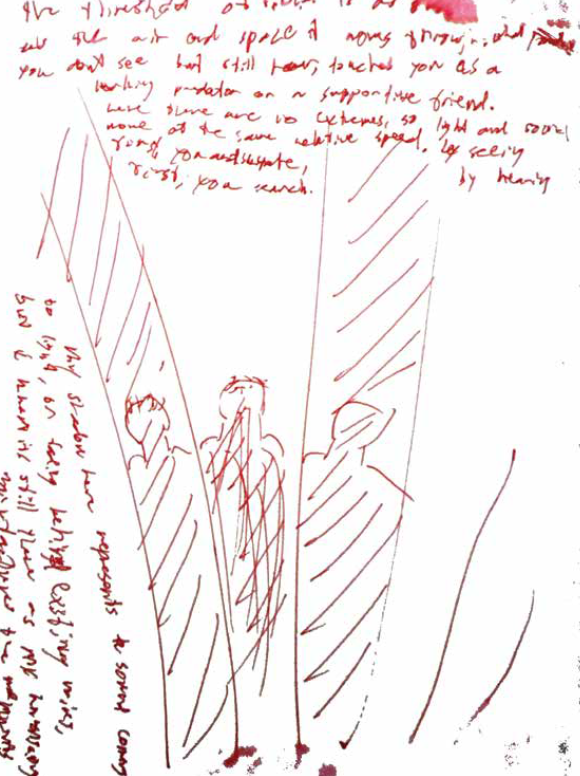
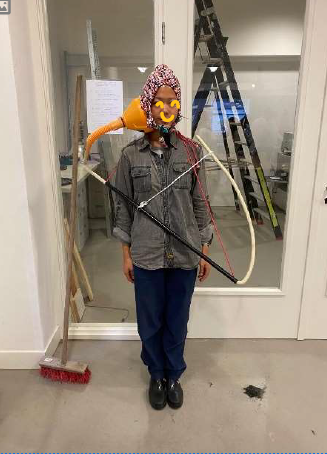
“In the best way possible, this was uncomfortable. Space here was based on stimuli. Throughout the entire day we constructed a story, a setting, characters, buildings, connections, impact, individuality, community, and an environment: all the things architecture serves as a medium for. Accomplished through unconscious making, a story-building exercise, and a viewing of the documentary “Children Who Won’t Die,” We gained an understanding of the physical experience of architecture. Radicalizing the architectural experience proved an immediate effect on the body when we were told to interact with space in radical ways, like if we were 5 years old, or a snake. Reflecting now, the density of the space was created was purely dependent on our bodies capability, or lack thereof to interact with it. The objects that constructed the space, did not constrict as fragments, but once we introduced ourselves, we were instructed to conform, bending to space.”
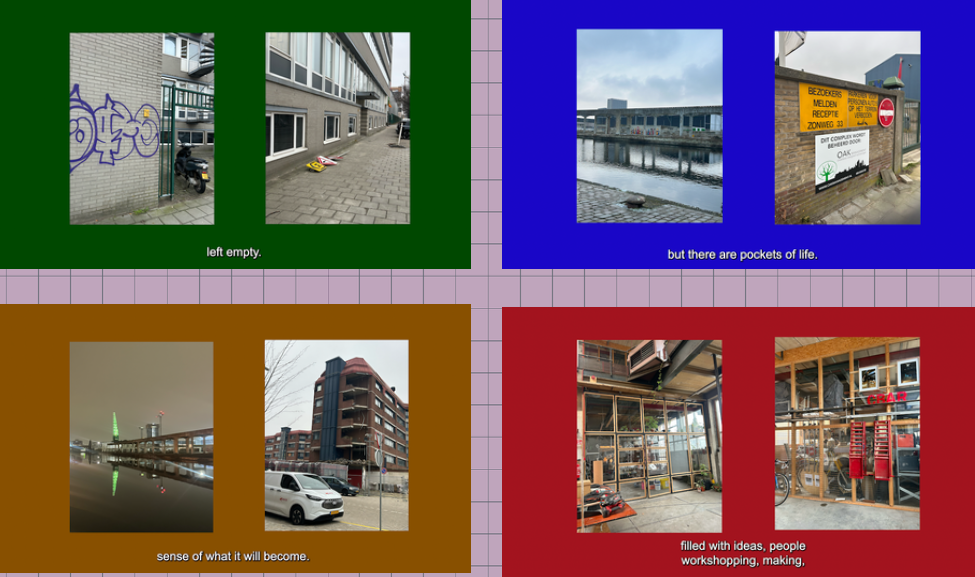
“In this film workshop with Mauricio, we learned Premier Pro tools for narrative storytelling. Although I have experience with Premiere Pro from previous film classes, it was helpful in learning how to apply filmmaking as a tool in a spatial design practice. As this workshop was at the beginning of the studio as we were just getting to know the Binckhorst, it was a nice way of processing our first impressions of the neighborhood.”
“Rene gave us a lecture about his book smooth city, introducing us to the concepts of smoothification and queering in regards to urban planning and infrastructures. after rene’s lecture, we were given the task of taking a walk through the binckhorst, and to take photo’s of our surroundings that related to his lecture. it was a helpful way of applying his theory to our surroundings.”
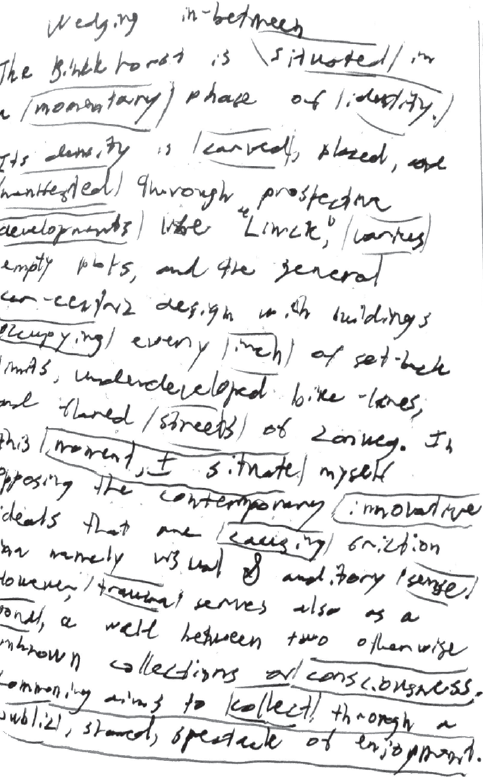
“Our sessions with Neeltje set the tone for our future explorations within the Binckhorst. Encouraged to note the obvious, be social, and embed ourselves in the context proved to be critical notions to understand a changing urban environment. Neeltje’s fascination with maps encouraged me to begin creating multiple maps throughout this first stage of research. Especially to continue writing. Her Georges Perec reference is an important and very conscious exercise in experiencing and observing space. Derived from “Exhausting a Place in Paris” Neeltje’s listing exercise for the Binckhorst had good intentions, but lacked engagement. Georges Perec’s method of understanding urban space required him to physically be in the space. In this workshop, we were detached from the Binckhorst, so I find that this method was difficult to ground and remain engaged in since we were relying on our memories rather than the present space.”
“There seemed to be a collective struggle with the fixed, semi-fixed, and non-fixed organization activity. As we asked questions for clarification, we were met with similar responses to the last, providing no extra information on how to subjectively define fixed, semi-fixed, and non-fixed. The terms were presented as something open, yet it felt like there was a specific observation Neeltje was searching for. If our perceptions didn’t align, we were met with frustration, a subtle attack on our perception of space.”
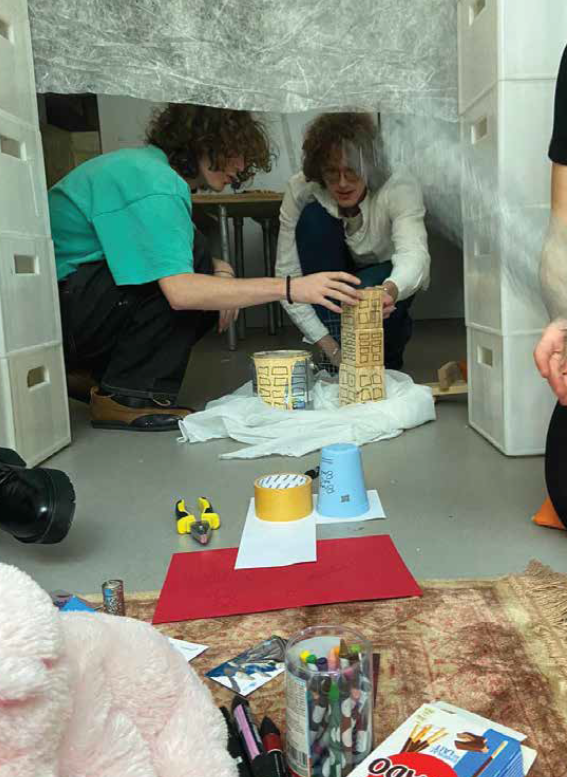
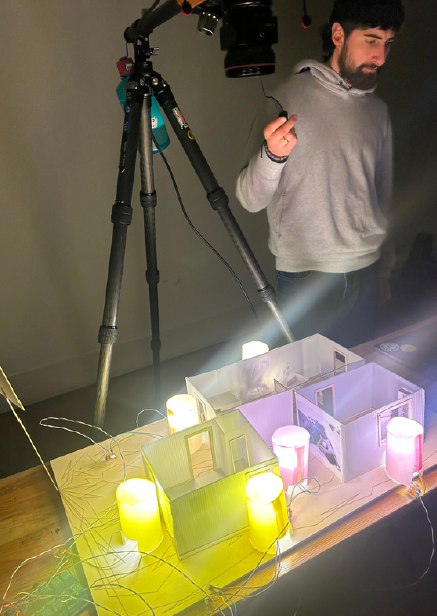
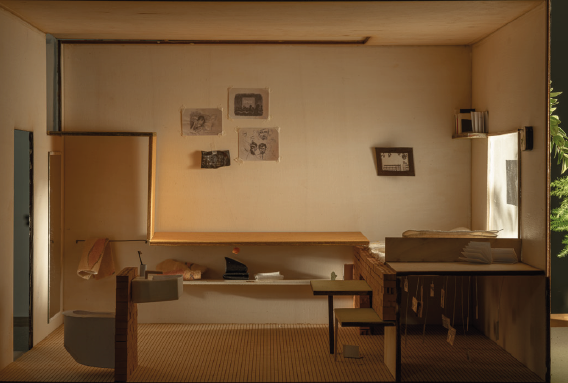
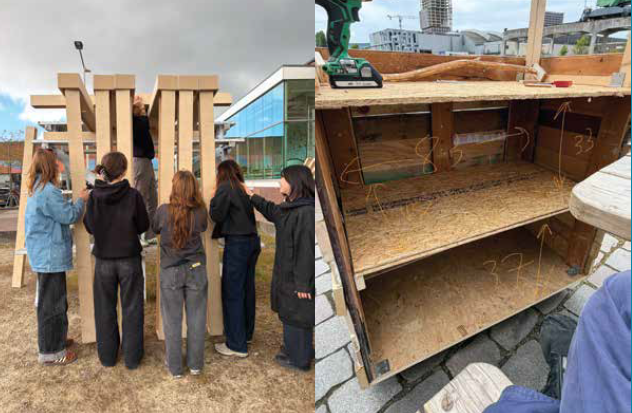
“The Prototype Building workshop consisted of several sessions focused on developing ideas through making. In the first session, we briefly shared our studio project ideas and did a collaborative building exercise using timber beams from an old pavilion project. Each of us spoke out a keyword or theme, and we responded by quickly constructing a spatial intervention together. This was a fast and intuitive exercise that encouraged experimentation and teamwork. The rest sessions were for developing our individual models and prototypes. During this process, we received valuable technical feedback regarding structure, materials, construction methods, and communication of ideas. The workshop helped me improve my model-making skills through hands-on testing.”
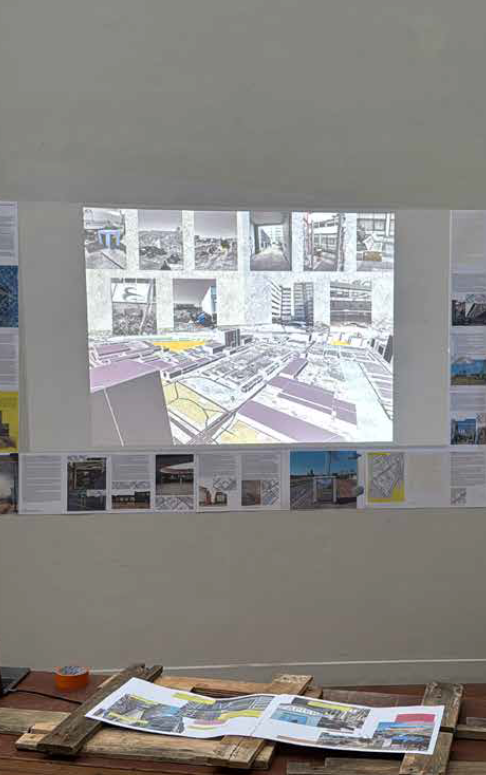
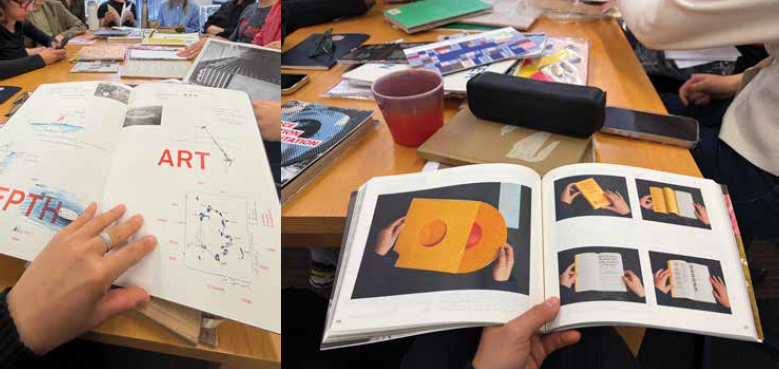
“The Graphic Design workshop consisted of several sessions. The first focused on the development of our collective reserach booklet, while the second was for our individual research paper publications. In each session, Esther shared a variety of examples of publications, introducing us to different approaches to graphic design and visual communication. I found it very interesting to see how ideas, research, and narratives can be communicated through the combination of text, images, layout, material choices, etc... We also had opportunities to discuss our own publications with her and receive feedback on concepts, structure, and presentation. It was really helpful time that helped me develop my publication in a more intentional way.”
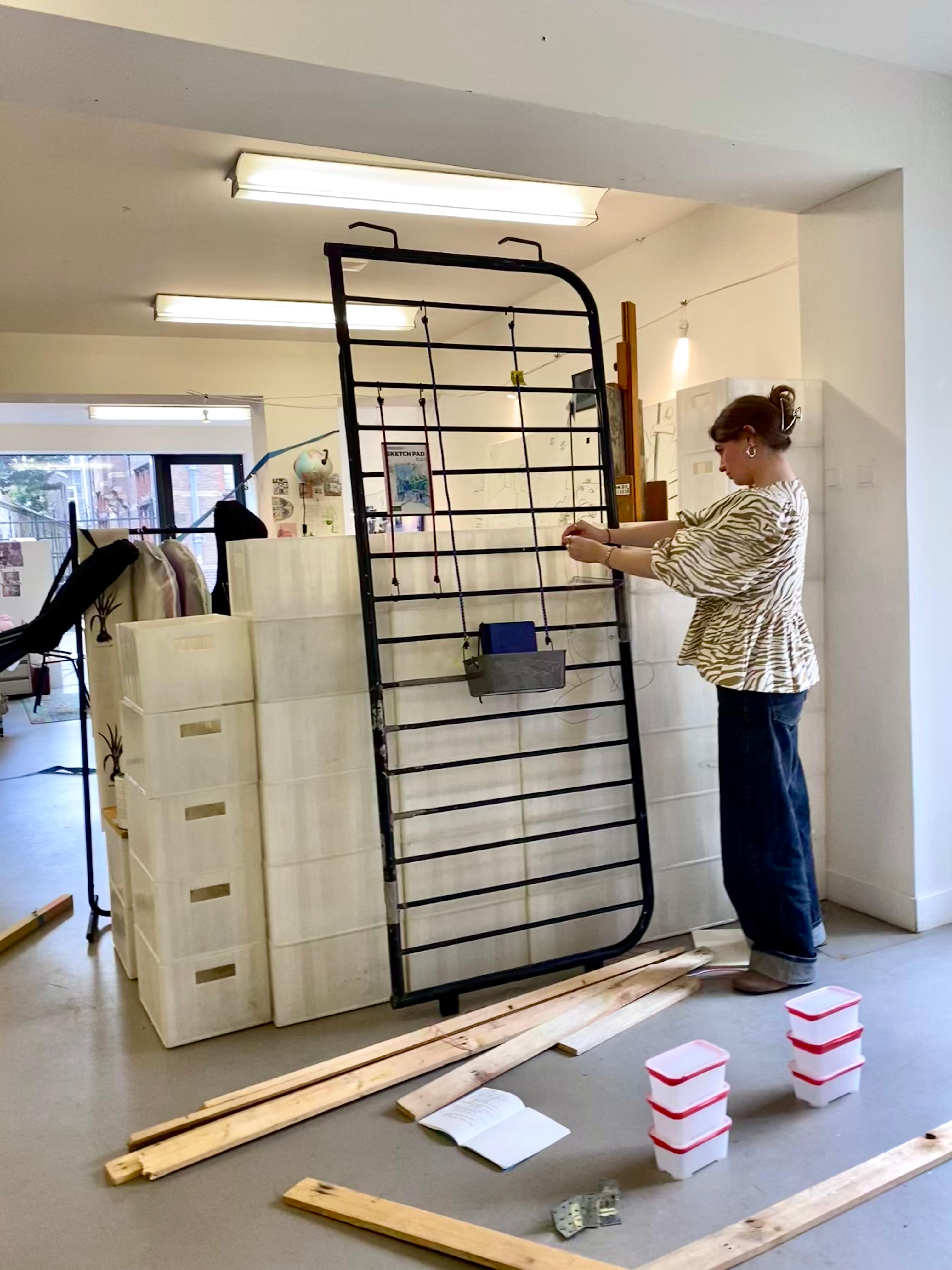
“Maggie and Misia did a wonderful job of catalyzing us into the making phase of Studio III. The worksheet helped me view my concept, site, and material from an outside perspective, yet still through my own eyes. It was amazing to see all of us prototyping and testing our initial ideas in the same room. We all spent the whole day making, eager to materialize our findings.”
“The first part of the workshop was a great introduction to solidify our concept. We shared our responses to the worksheet in groups and discussed them. The small groups was a great little peer review session to brainstorm ideas and to see what about our concepts resonated or not.”
“As a devoted maker, I was so happy to begin carving and learning the bricks I’d be using. It felt like I was in my element.”
“The making process was very interactive as well, as we were all bouncing ideas off each other, asking about what would be the best way to cut, join, and make certain things.”
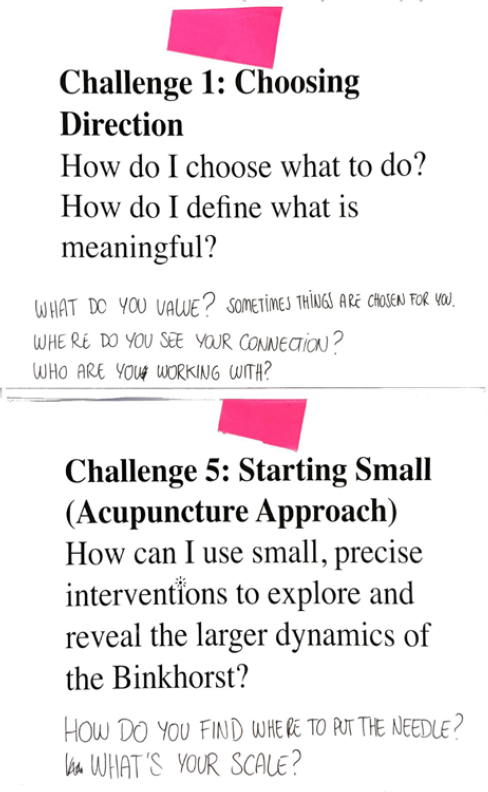
“Harriet was such a welcoming presence to introduce us to our future group work. We speculated challenges, restrictions, obligations, roles, and strengths. Our initial worksheet had some repetitive questions but I found myself giving slightly different answers so at first glance I was confused, but I recognize this is likely on purpose so that we go beneath our personal surface and introduce some vulnerability.”
“The main portion of our workshop revolved around our challenges. Our goal was to provide tools to the questions we posed rather than concrete answers. This was a challenging way to think but certainly allowed us to think critically and in a broad way to essentially give each other as much support as possible.”
“Overall, the activity was refreshing and excited me to be working collaboratively. I loved Harriet’s enthusiasm and persona as she interacted with each group, serving more as a team member rather than just a tutor.”